The Bondi Beach Attack Was a Warning, Not an Anomaly
- James Consulting

- Dec 15, 2025
- 4 min read
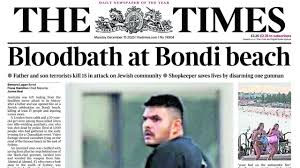
On 14 December 2025, a public celebration on one of the world’s most recognisable beaches turned into a scene of terror. During a Hanukkah event at Bondi Beach, Sydney, two gunmen opened fire into a civilian crowd, killing and injuring innocent people who had gathered to celebrate, not to protest, not to provoke, simply to exist openly in public space.
For many, the instinctive reaction was to see this as Australia’s problem. A tragedy far away.
A failure of someone else’s system.
That would be a mistake.
For professional security officers in the UK, Bondi should be viewed as a case study, not in if something similar could happen here, but when, where, and how prepared we are when it does.
The Detail That Should Make Us Uncomfortable
One of the most disturbing facts to emerge from the Bondi Beach attack is that one of the gunmen had legal access to firearms through a valid licence.
This was not a crude black-market acquisition. It was not a smuggled weapon slipping past borders undetected. It was lawful access, granted through a regulatory system designed to assess suitability and manage risk.
Australia has some of the strictest firearms controls in the world, yet the system still failed to prevent catastrophic misuse.
That matters, because it shatters a comforting assumption many societies lean on: that licensing equals safety.
It doesn’t.
It reduces risk, but it does not remove intent, ideology, grievance, or opportunity.
Why This Is Relevant to the UK
The UK often reassures itself that firearms violence “isn’t our problem.” Compared to many nations, that is statistically true. But statistics do not stop lone actors, ideologically motivated attackers, or individuals who radicalise after vetting.
The reality is this: licensed firearms exist in the UK. Shotguns, sporting rifles, and specialist firearms are legally held by individuals who have passed background checks, interviews, and home inspections.
The overwhelming majority are responsible and law-abiding. But terrorism does not rely on averages; it relies on exceptions.
A licensed individual can still:
Radicalise after vetting
Experience mental health deterioration
Be coerced or influenced by extremist ideology
Allow access to weapons through negligence or proximity
From a protective security perspective, the lesson is clear and uncomfortable:
Legal ownership does not automatically mean low threat.
Bondi reminds us that capability does not always come from criminality. Sometimes it comes from legitimacy.
Public Space Is the Battlefield of Choice
Bondi Beach was not selected by accident.
Open, symbolic, crowded, and emotionally charged locations remain the preferred targets for modern attackers because they deliver:
Maximum casualties
Maximum media coverage
Maximum psychological impact
In the UK, equivalents are obvious:
Public festivals and faith events
Transport hubs
City centres
Tourist landmarks
Political or cultural gatherings
Security professionals must accept that crowded public space is now the default threat environment, not the exception.
The UK Threat Landscape: Beyond Simple Narratives
It is easy and dangerous to reduce terrorism to simplistic explanations. Migration, asylum, ideology, mental health, online radicalisation, and state influence all intersect in complex ways.
What matters operationally is this:
Threats can come from people known to authorities
Threats can come from people with no criminal history
Threats can come from people who appear compliant, vetted, and legitimate
Asylum status, nationality, or licensing alone are not reliable predictors of violent intent.
Professional security officers do not have the luxury of focusing on one demographic or narrative. We focus on behaviour, indicators, and opportunity.
What This Means for UK Security Officers
Bondi exposes the danger of static thinking.
If your threat model assumes:
Terror only comes from illegal weapons
Licensed individuals are inherently low risk
Attacks require complex networks
…then your model is already outdated.
Modern protection requires a shift toward behavioural threat detection and dynamic risk assessment.
Operational Priorities Going Forward
1. Behaviour Over Background
Background checks are essential, but they are not enough. Officers must be trained to recognise:
Fixation and grievance language
Surveillance behaviour
Unusual interest in access points or routines
Sudden changes in demeanour or obsession
Bondi showed us that danger can hide behind paperwork.
2. Dynamic Risk Assessments
Threat levels change by the hour, not the year.
Security teams must continuously reassess:
Event environments
Crowd density
Access control vulnerabilities
Medical response times
Plans written weeks earlier are irrelevant if they are not actively reviewed.
3. Armed and Unarmed Response Reality
While most UK officers are unarmed, the threat may not be.
This means:
Clear evacuation and containment plans
Immediate medical response capability
Effective communication under stress
Liaison protocols with armed police
Time lost to confusion costs lives.
4. Stop Assuming “That Wouldn’t Happen Here”
Australia assumed strict gun laws made mass shootings a thing of the past. Bondi proved otherwise.
The UK must avoid the same complacency.
Terrorism adapts. Security must adapt faster.

Protecting Clients and Principals in This Environment
Close protection and protective security now demand:
Intelligence-led planning
Route and venue unpredictability
Client education on realistic threats
Contingency planning for low-probability, high-impact events
Your role is not to reassure, it is to prepare.
Final Thought
Bondi Beach was not a failure of one system. It was a reminder of a universal truth:
Security systems manage risk, they do not remove it.
When an attacker can exploit legitimacy, licensing, and normality, the only defence is professional vigilance, adaptive thinking, and disciplined preparation.
For UK security officers, the question is not whether something similar could happen here.
The question is this: When it happens here in the UK, will we be ready to act, or will we just become another statistic?


Comments